
OpenAI Visual Ads in ChatGPT: What Businesses Must Know
OpenAI will test visual ads during ChatGPT image generation later in October 2026. Here is how the format works, why it matters at 1.2B weekly users, and the checklist businesses need.
The Short Answer
Advertising is coming to the AI chat window, and this time it is visual. On October 5, 2026, OpenAI announced it will begin testing ChatGPT visual ads later in October, starting with image generation inside ChatGPT for a small initial group of advertisers in the United States. The news matters because it lands at a…
Advertising is coming to the AI chat window, and this time it is visual. On October 5, 2026, OpenAI announced it will begin testing ChatGPT visual ads later in October, starting with image generation inside ChatGPT for a small initial group of advertisers in the United States. The news matters because it lands at a moment when ChatGPT has reached 1.2 billion weekly users, a scale reported by techstartups.com on October 5, 2026, that makes it one of the largest audiences ever assembled on a single conversational platform. For businesses, this is not a distant experiment. It is a brand new advertising channel opening at the exact moment when customers are asking an AI what to buy, which service to hire, and how to solve their problems.
For years, the pattern of every major platform has been the same: build a massive audience first, then monetize it. OpenAI followed that script with ChatGPT Ads, which began as a US test on February 9, 2026, expanded to more than 60 countries by September 23, and hit a $1 billion annualized revenue run rate on August 31, less than 200 days after launch, according to OpenAI. The new visual format is the next chapter. It turns the loading screen of ChatGPT's image generator, previously dead time for everyone involved, into advertising inventory. This article breaks down how the tests work, why OpenAI is doing this now, what it means for your marketing, and exactly how your business should prepare.
How ChatGPT visual ads Work Inside the Image Generator
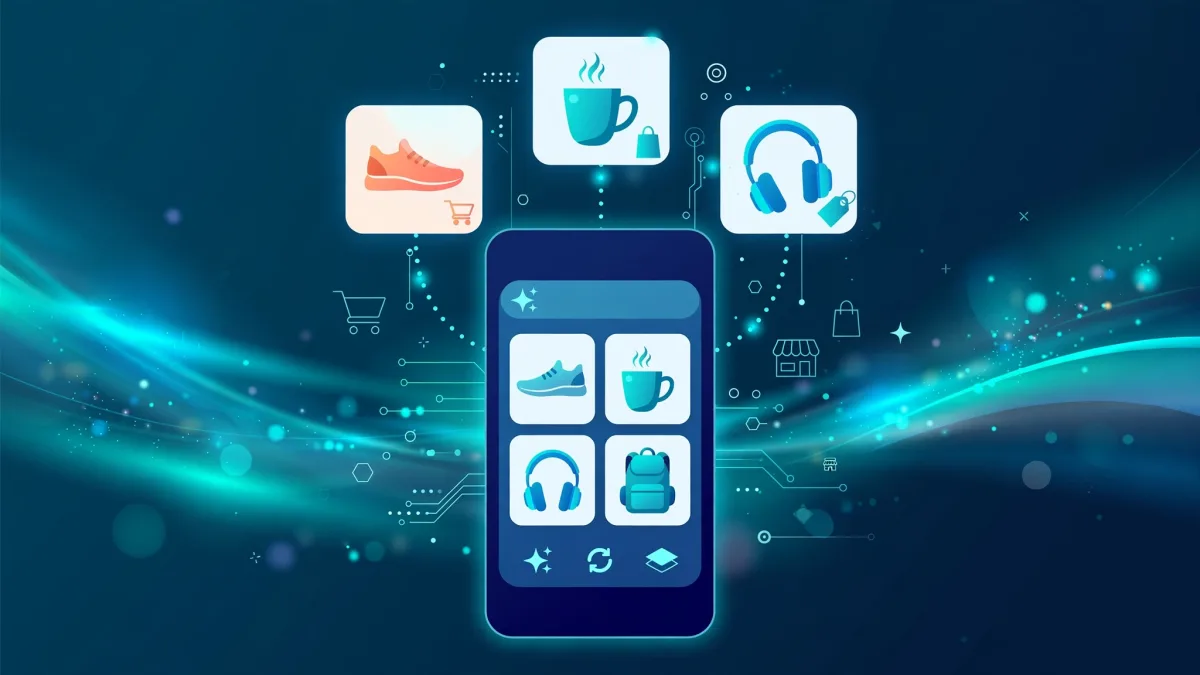
The new format is OpenAI's first image-based ad unit inside ChatGPT. When a user asks ChatGPT to generate an image, the wait time for the model to render the picture becomes ad space. During that window, a product carousel appears, built around showing products in use or the experiences a product makes possible, rather than static banner images. For example, a user generating a kitchen renovation mockup might see a carousel of countertop materials or lighting fixtures relevant to the context.
OpenAI has set three hard rules for the test, all confirmed in its October 5 announcement:
- Ads are clearly labeled and kept separate from the image being created. The visual ad appears beside the generation process, never blended into the image the user requested.
- Advertising does not influence ChatGPT's answers. OpenAI states that ads run on separate systems from the chat model, and advertisers cannot shape, rank, or alter the chatbot's responses in any way.
- Conversations stay private. OpenAI says it does not share user conversations with advertisers and never sells user data to advertisers. Advertisers receive only aggregated, non-identifying information about how their ads perform.
The rollout details confirmed so far: the test starts later in October 2026, in the United States only, with a select group of advertisers. OpenAI has not announced a timeline for other countries. Notably, only users on the Free and Go plans see ads inside ChatGPT. Plus, Pro, Business, Enterprise, and Edu subscribers, plus accounts identified as under 18, see none. OpenAI also says it has built safeguards that block ads from appearing during emotionally vulnerable or sensitive conversations.
Why OpenAI Is Betting on ChatGPT visual ads at 1.2 Billion Users
The motivation is straightforward arithmetic. With 1.2 billion weekly users, ChatGPT has an audience that rivals the largest social networks on earth. But users of ChatGPT are doing something fundamentally different from social media users: they are asking questions, researching products, comparing alternatives, and making decisions in real time. That is the exact moment advertisers dream of reaching people, the point of highest purchase intent.
The visual ad test is also OpenAI's answer to the biggest complaint advertisers raised since ChatGPT Ads launched in February: measurement was too limited. Alongside the new format, OpenAI announced a full measurement stack. Conversion data now flows through integrations with Hightouch, Tealium, and LiveRamp. Ten attribution partners are involved, including AppsFlyer, Adjust, Branch, Singular, and Kochava. Geo-based incrementality experiments are running with Haus, Measured, and WorkMagic, while brand-lift tests involve Kantar and Cint. For brand safety, DoubleVerify and Integral Ad Science are running brand suitability pilots, and OpenAI says these firms operate in controlled testing environments without access to private user conversations.
Early partner results give a hint of the opportunity. OpenAI published advertiser-reported outcomes including WeightWatchers reporting a 15.3 percent lower cost per acquisition than blended paid search, and Portland Leather reporting that 93 percent of visitors from ChatGPT Ads were new. These are hand-picked cases, so they are directional, not guarantees. But they point to one of the format's strongest arguments: an audience in active research mode skews new, not retargeted.
The announcement was timed for the start of Advertising Week New York, where OpenAI's executives planned to ask marketers for feedback. With tens of thousands of advertisers already on the platform and the ad business at a $1 billion annualized run rate, OpenAI is treating advertising as a core revenue pillar. The image-loading test is part of a much bigger financial push toward a larger end-of-decade target.
What This Means for Digital Marketing and Advertisers
Conversational advertising is a genuinely new channel, and the visual format makes it richer. Traditional search ads capture intent at the query level, one keyword at a time. Social ads capture attention in a feed. ChatGPT visual ads capture something in between: a person mid-decision, describing what they want in full sentences, with the AI generating context in real time. The ad inventory sits beside that context, which is why OpenAI positions it for moments like planning a trip, evaluating business software, or considering products for the home.
For digital marketers, this creates a fourth major surface to manage alongside search, social, and retail media. The strategic shift is from keyword bidding to conversation-context relevance. In August 2026, OpenAI introduced product carousels that pull items directly from retailer product feeds, similar to Google Shopping. That tells you where this is going: product data feeds, not just ad copy, will be the currency of this channel. Brands with clean feeds and rich lifestyle imagery will be better positioned than brands still thinking in headlines.
For agencies, the timing is a window. The test is limited to the US and a small advertiser group today, which means there is time to build expertise before inventory opens up. OpenAI has named dentsu, Havas Media, Omnicom Media, Publicis Groupe, and WPP as agency partners, with self-serve ChatGPT Ads Manager access for eligible smaller businesses. If your digital marketing partner is not already tracking this channel, you should be asking why.
The trust question you cannot ignore
OpenAI's biggest promise, repeated in every announcement, is that ads do not influence ChatGPT's answers and advertisers cannot steer what the model generates. That commitment is the foundation of the whole format. But it is a company commitment, not an independently verified fact. As the formats multiply and the revenue targets grow, smart brands should watch how ads and answers interact, especially around product recommendation questions. The firms that stay ahead will be the ones that understand this channel early and hold it to the same scrutiny as any other.
An original insight: the loading screen is the tell
Here is the detail most coverage misses. OpenAI chose the image-generation wait as its first real visual ad slot. That is not a creative choice, it is a tell about where the monetization pressure is heaviest. Image generation is compute-intensive and expensive to run, and its audience skews heavily toward creators, marketers, and businesses, exactly the demographic with commercial intent. The loading screen was pure cost for OpenAI; now it is inventory with a buyer attached. Expect future ad formats to follow the same logic: they will appear first wherever compute costs meet commercial intent. The next slots will likely be around deep research tasks and AI-generated reports, not casual chats. Prepare for those, not just for carousels.
How Businesses Can Prepare: A Practical Checklist
You do not need to buy anything today. The test is US-only with limited advertisers, and inventory has not reached most markets. But the channel is clearly scaling from test to global business within a year, given the trajectory from February to now. Here is a concrete checklist to get ready:
- Get your product feed in order. Product carousels pull from retailer feeds, so clean titles, accurate descriptions, and high-quality images will matter here just as they do for Google Shopping. Audit your feed now.
- Prepare visual creative built for context. The visual format rewards product-in-use and lifestyle imagery, not static banners. Start producing carousel-ready visuals for your best-selling or highest-margin products.
- Claim your presence in ChatGPT Ads Manager. Self-serve access has expanded to the US, India, Europe, the Middle East, North Africa, and Southeast Asia. Eligible businesses can create and manage campaigns directly, so set up your account before demand spikes.
- Wire up measurement early. With Hightouch, Tealium, LiveRamp, AppsFlyer, Adjust, Branch, and others now integrated, connect your conversion tracking and attribution stack so your first campaigns are measurable from day one.
- Build a conversational SEO strategy. This is the flip side of advertising: being visible in AI answers organically. As brands are learning to monitor what AI says about them, the same research habits that make your content quotable by ChatGPT will inform how your brand shows up in ad-adjacent contexts.
- Align with your AI agents strategy. As always-on AI agents start handling business tasks, the businesses that already think in AI-native terms will adapt to AI-native ad formats fastest. Treat this as one part of a broader AI presence, not an isolated channel.
- Train your team on the new tools. OpenAI's Creative Tools can generate, localize, or translate ad creative from your existing brand materials, and Audience Tools let advertisers upload first-party customer data. Review what these mean for your privacy policy and data governance.
- Set brand safety expectations. Track the DoubleVerify and Integral Ad Science pilots. Decide in advance what adjacency standards your brand requires before your creative appears next to AI-generated content at scale.
- Watch competitors, not just the platform. Early movers in conversational advertising will learn faster than followers. Monitor which brands appear in your category's contexts and benchmark against them.
- Work with an agency already in the program. Partnering with a team that understands digital marketing and SEO across both traditional and conversational channels means you enter the test phase prepared instead of playing catch-up when inventory opens in your market.
Ad Channels Compared: ChatGPT vs Google vs Social
Every business should understand how this channel differs from the ones it already buys. The comparison below is based on OpenAI's published details and standard industry characteristics of the other platforms:
| Factor | ChatGPT Ads | Google Search Ads | Social Media Ads |
|---|---|---|---|
| Primary moment | Active research and decision-making in conversation | Keyword-based search intent | Feed browsing and discovery |
| Audience scale | 1.2 billion weekly ChatGPT users | Billions of daily searches | Billions of monthly active users |
| Ad formats | Sponsored units, product carousels, new visual image ads in testing | Text, shopping, video, display | Feed posts, stories, reels, video |
| Targeting basis | Conversation context, no keyword bidding; first-party data via Audience Tools | Keywords, audiences, remarketing | Demographics, interests, lookalikes |
| Measurement | Hightouch, Tealium, LiveRamp, AppsFlyer, Adjust, Branch, Haus, Kantar and more (2026) | Google Ads reporting, GA4 | Platform pixels, offline conversions |
| Brand safety | DoubleVerify and Integral Ad Science pilots; ads blocked in sensitive conversations | Mature placement controls | Varies by platform |
| Maturity | New (Feb 2026), 60+ countries, test phase for visual ads | Established (20+ years) | Established (10+ years) |
The strategic read: ChatGPT ads should not replace your existing channels, they should complement them. Search captures the bottom of the funnel, social builds demand, and conversational ads reach buyers in the research-heavy middle where decisions take shape. The businesses that treat AI-driven platforms as a permanent marketing surface, not a novelty, will hold the advantage as the format matures.
Frequently Asked Questions
Will ChatGPT show ads while I generate images?
OpenAI said on October 5, 2026, that it will begin testing a visual ad format during image generation later in October, in the US, with a small initial group of advertisers. The ads are described as clearly labeled and visually separate from the image you are creating. This is a test, not a full rollout, and no timeline has been announced for other countries.
Do the ads change the images ChatGPT generates?
According to OpenAI, no. The company states the ads remain separate from the generated image and that advertising does not influence ChatGPT's responses. Advertisers cannot shape, rank, or alter what the model produces. Treat this as OpenAI's stated commitment, which the industry is watching closely as ad revenue grows.
Who sees ChatGPT ads and who does not?
Only users on the Free and Go plans see ads. Plus, Pro, Business, Enterprise, and Edu subscribers see none, and accounts identified as under 18 are excluded. So whether a user sees visual ads depends entirely on their subscription tier.
Can advertisers see my ChatGPT conversations?
OpenAI says no. Conversations remain private from advertisers, and advertisers receive only aggregated, non-identifying performance information. The brand suitability pilots with DoubleVerify and Integral Ad Science run in controlled testing environments without access to private user conversations, according to OpenAI.
How is this different from the ads ChatGPT already shows?
The existing format, launched in February 2026, places a single sponsored unit with a headline, description, image, and link at the bottom of ChatGPT answers. The new visual format shows product carousels during image generation while the user waits, and in August 2026 OpenAI added carousels that pull items directly from retailer product feeds. Each format targets a different moment in the user journey.
Should small businesses care about ChatGPT ads?
Yes, and early evidence suggests the self-serve route is designed for them. OpenAI has expanded Ads Manager self-serve access across the US, Europe, India, Southeast Asia, and other regions, and agency partners like WPP and Omnicom are onboarding brands in new markets. As AI assistants like Microsoft Copilot keep expanding their business features, conversational platforms are becoming everyday tools for customers, which makes them everyday surfaces for marketing too.
ChatGPT visual ads are still a test, but the trajectory is unmistakable: from a February pilot to 60+ countries, a $1 billion annualized run rate, and now image-based inventory at a platform with 1.2 billion weekly users, all inside eight months. The businesses that prepare their product feeds, creative assets, measurement, and strategy now will enter the channel as leaders when it opens in their market. If you want a partner who is already tracking conversational advertising and can build your brand's presence across search, social, and AI platforms, talk to us today: contact the team at sktechnology.org and get a readiness plan for the AI advertising era.
Related Articles
Keep reading — more guides you may find useful.
Related Services
Services connected to this guide.