
On-Device AI Scam Detection: A Business Privacy Guide
GovTech Singapore and Google DeepMind are developing scam detection that runs entirely on the phone. This business guide explains where it fits, how two-stage detection controls false alarms, and what to demand before trusting it.
The Short Answer
Most scams no longer arrive as an obvious fake link. They arrive as a conversation: a friendly message turns into a helpful offer, then into urgency, then into a request for money or a password. That slow build is exactly why on-device AI scam detection is drawing attention from businesses, regulators and security teams. The…
Why a Warning on Your Phone Matters More Than Ever
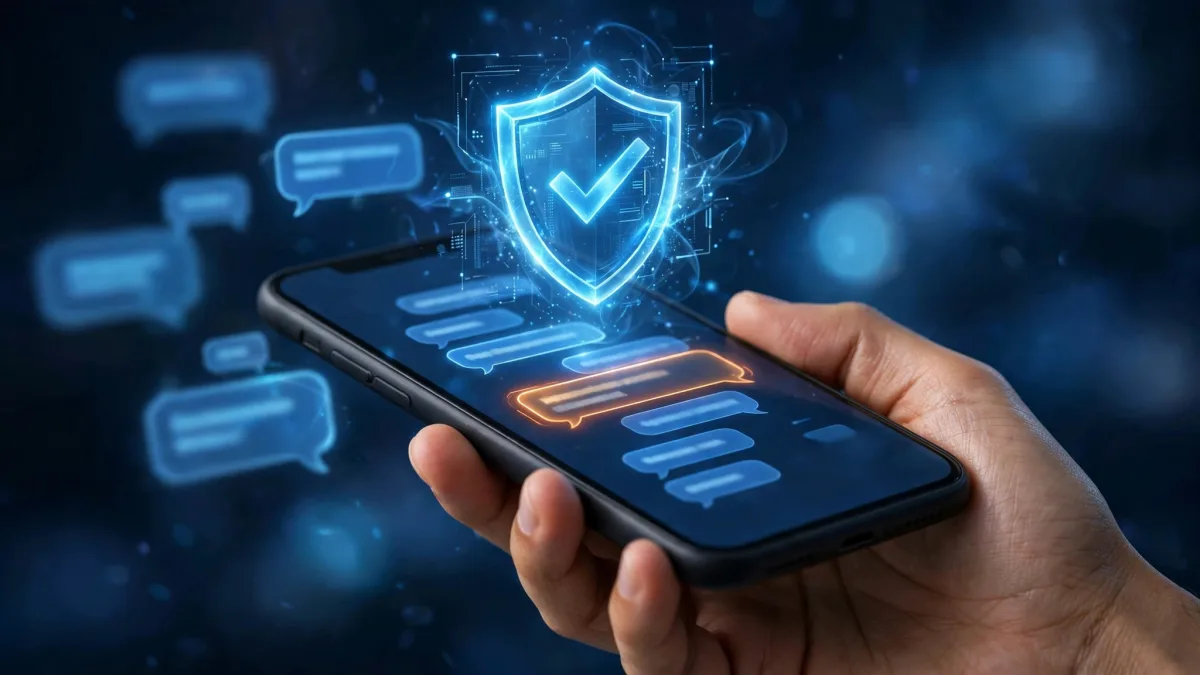
Most scams no longer arrive as an obvious fake link. They arrive as a conversation: a friendly message turns into a helpful offer, then into urgency, then into a request for money or a password. That slow build is exactly why on-device AI scam detection is drawing attention from businesses, regulators and security teams. The idea is simple to explain and harder to get right: let the phone itself spot manipulation in a conversation, in real time, and warn the person before they act.
Singapore is the clearest public example. At Singapore International Cyber Week on October 14, 2026, Minister for Digital Development and Information Josephine Teo announced that GovTech Singapore and Google DeepMind are developing a scam detection model that runs entirely on the phone, so messages never leave the device. It is a version of Google's lightweight Gemma model, fine tuned on local scam conversations, including impersonations of public institutions, banks and local figures, plus trending regional schemes. This is still in development and being prepared for deployment, not a shipped product a business can buy today.
For a business buyer, that distinction matters. This guide explains where this technology fits, what its two stage design buys you, and what to demand before trusting any similar system. The central lesson is one vendors rarely put in a sales deck: a warning that fires too often gets ignored, so false alarm design matters more than the headline detection rate.
What on-device AI scam detection Actually Does
Traditional scam filters often look for known bad links, suspicious numbers or familiar phrases. Modern social engineering is harder to catch that way, because scammers avoid obvious indicators and build trust gradually, then create a sudden problem that only an urgent payment can solve. The GovTech and DeepMind model is designed to read the flow of a conversation, not just a single message, and to recognise patterns such as manufactured urgency, escalating demands and pressure to move outside normal verification channels.
When the model confirms a threat, it triggers a real time on screen warning telling the user to pause before sharing money or sensitive details. A warning after the money has moved is a report, not protection. A warning in the moment gives the person a chance to stop and check through another channel. For businesses, the same principle applies to supplier payments and executive requests. The riskiest moment is rarely the first message. It is when trust has been built and action feels normal.
According to Google, scams including investment fraud, fake job offers and impersonation of public officials make up more than half of reported crimes in Singapore and have accounted for over SG$4 billion in losses since 2019. Social engineering scams account for up to 80% of scam losses. Those figures describe Singapore, not every market, but the pattern is familiar elsewhere too: the attack targets human judgement, not just software.
Where on-device AI Fits in a Business
On device protection does not replace firewalls, email filtering or staff training. It fills a gap those controls leave open: the private conversation on a phone, outside the corporate systems a security team can monitor. It fits best in three practical areas.
1. Fraud warnings at the moment of action
The strongest use case is a warning just before a payment, a credential share or a remote access approval. Staff are most vulnerable when a conversation feels legitimate and urgent at the same time. A short warning to pause and verify through a known number or official channel can break that pressure.
2. Sensitive data handling on personal devices
Many employees handle work on phones that also hold personal chats, photos and banking apps. A cloud based scanner that uploads conversations creates its own privacy problem, especially for regulated work. An on device model avoids that trade off in principle, because analysis happens locally. That also matters for end to end encrypted messaging, where a cloud scanner cannot inspect content without breaking the encryption users rely on. Ask exactly where analysis happens, what leaves the device, and who can access any resulting data.
3. Offline and low connectivity work
Field staff and travelling employees often work with patchy connectivity. A system that needs a constant cloud connection cannot protect a conversation that happens offline. On device analysis can, in principle, keep working without a signal, provided the model updates reliably when connectivity returns.
Businesses reviewing their wider defences should read our cybersecurity essentials for small businesses and consider how phone based warnings sit beside email, network and identity controls. Our cybersecurity services are built around that layered view, combining prevention, detection and response rather than relying on a single tool.
What Two Stage Detection Buys You: Battery Savings Plus False Alarm Control
The GovTech and DeepMind design uses two stages for a practical reason. Running a full language model on every message would drain battery and slow the phone. So a small, low power classifier screens messages first. Only if it spots a possible threat does the fine tuned Gemma model read a larger slice of the conversation to confirm the threat or discard the false alarm.
| Stage | What it does | Why it matters |
| Stage 1: Lightweight screening | Screens incoming messages with minimal power use and flags possible threats | Keeps battery use low |
| Stage 2: Deeper conversation review | Reads a larger slice of the conversation to confirm a pattern or dismiss a false alarm | Reduces noisy warnings and protects trust in the system |
| Warning | Shows a real time prompt to pause before sharing money or sensitive details | Intervenes at the moment of action, not after the loss |
Battery design is a business issue. A security feature that staff switch off because it drains their phone protects nobody, and one that only works while charging leaves the riskiest moments uncovered. Ask what runs all the time, what runs only when needed, and what happens in battery saver mode.
False alarm control is the deeper benefit. A first stage screen will flag some harmless conversations, because ordinary language can resemble scam language in isolation. The second stage adds context before a warning appears. Without it, users learn that most warnings are wrong and start dismissing all of them, including the real ones.
Why False Alarm Design Matters More Than the Detection Rate
Vendors love to quote detection rates. A buyer should be more interested in the false positive rate, the share of legitimate conversations wrongly flagged, and in how warnings behave in everyday use. A warning system lives or dies on trust, and trust is spent by false alarms far faster than it is earned by correct detections.
Think about how people actually behave. The first warning gets full attention. The fifth warning in a week gets a quick dismissal. The twentieth gets ignored before it is even read. If a system cries wolf over ordinary work chats, staff may become less alert to real scams, because they have trained themselves to tap past warnings without thinking. A noisy system can make the human weaker, not stronger.
That is why the GovTech and DeepMind two stage approach is instructive even before the product ships. It treats false alarm dismissal as a core design job, not an afterthought. Ask how many warnings a typical user would see in a normal week, and whether warning wording changes with confidence level. A low confidence signal should not look identical to a high confidence threat.
A good warning also respects the moment. One that explains the pattern in plain language and offers a safe verification step is far more likely to be followed than one that blocks work without explaining why. Demand for protection is high: Google reported in October 2026 that its AI powered scam detection in Phone by Google and Google Messages already flags more than 5 million suspected scam calls and texts every month.
How to Judge on-device AI scam detection Before You Trust It
The GovTech and DeepMind model has not published a false positive rate, a launch date or a list of supported devices, and buyers should not accept invented versions of those figures from any source. What you can demand from any vendor is evidence and a clear operating model. Use this checklist before signing anything.
- False positive rate, measured in real use: Ask for the rate on ordinary conversations, not just on scam samples, and how it was measured. A rate tested only on known scams tells you nothing about daily noise.
- Confidence levels and warning tiers: Ask whether low, medium and high confidence signals produce different warnings, and whether users can see why a warning appeared.
- Escalation path: Ask what a user should do after a warning, who they contact inside the business, and how a suspected scam is reported for others.
- Human review: Ask whether flagged cases are reviewed by people, how that review is governed, and what happens to conversation data during review.
- Consent and control: Ask how consent is obtained and whether users can pause or opt out. The GovTech and DeepMind deployment is described as requiring user consent, with access only under each application's terms of use, and neither Google nor the government able to read conversations through it.
- Updates, battery and coverage: Ask how often the model is retrained, what the measured battery impact is on typical devices, and which apps, languages and conversation types are covered, plus what is explicitly not covered.
Two questions deserve special attention: what happens when the system is wrong in each direction, and who is accountable when a warning is ignored or missed? A serious vendor should discuss both openly. On device processing is also a strong starting point, not a complete privacy guarantee on its own, so ask what telemetry leaves the device and whether any cloud component is involved. The related question of what AI tools can see in the browser is covered in our guide to AI agents reading browser tabs and privacy risks for business.
What This Technology Does Not Do, and How to Prepare
Even a well designed on device system has limits. It cannot verify that a caller is who they claim to be on its own. It cannot recover money once it has been sent, fix a broken payment approval process, or protect a user determined to proceed after a warning. It also cannot see scams outside the conversations it can access.
That is why the strongest business response is layered. Keep approval controls for payments, especially for changed bank details and unusual amounts. Keep a verification habit for executive and supplier requests, using a second channel the scammer does not control. Train staff with realistic grooming examples, not just fake links, and make reporting easy and blame free. Our AI powered phishing protection guide for 2026 explains how detection, habits and response fit together.
Because the GovTech and DeepMind model is still being prepared for phased deployment through applications, with further install and use details to be announced later, no business should plan a rollout date around it today. Prepare the ground instead: write a one page warning procedure, pilot any new tool with a small team, set a false alarm threshold, and confirm data handling in writing. If a vendor claims this system is already live everywhere, or quotes a false positive rate no public source supports, treat that as a warning sign.
Frequently Asked Questions
Is the GovTech and Google DeepMind scam detection model available now?
No. It is still in development and being prepared for deployment, rolling out in phases through applications with user consent required. Further install and use details will be announced later.
How does on-device AI scam detection protect privacy?
Analysis runs on the phone itself, so messages do not need to be sent to a cloud server. That also allows protection to work with end to end encrypted messaging. Buyers should still confirm what telemetry, if any, leaves the device.
Why does the system use two stages?
A small, low power classifier screens messages first. Only possible threats go to the fine tuned Gemma model, which reads a larger slice of the conversation to confirm the threat or dismiss a false alarm. That saves battery and reduces noisy warnings.
What matters more, detection rate or false positive rate?
For everyday use, false alarm design matters more. A system that warns too often teaches users to ignore warnings, including real ones. Ask vendors for false positive rates on ordinary conversations and weekly warning volumes for a typical user.
What should staff do when they see a scam warning?
Pause, do not send money or share sensitive details, and verify the request through a separate trusted channel, such as a number from the organisation's official website. Report it to your business security contact.
Does on-device detection replace security training and payment controls?
No. Payment approvals, second channel verification, incident reporting and staff training remain essential.
If your team wants help turning this protection into a practical, layered defence, our cybersecurity team can review your controls, payment approval process and incident response plan. Contact Skills Technology Solutions to start that conversation.
Related Articles
Keep reading — more guides you may find useful.
Related Services
Services connected to this guide.