
Industry-Specific Software: Why Tailored Systems Win
Industry-specific software arrives preconfigured for your sector's workflows, compliance rules, and integrations. Here is how it beats generic tools, which industries benefit most, and how to choose the right system.
The Short Answer
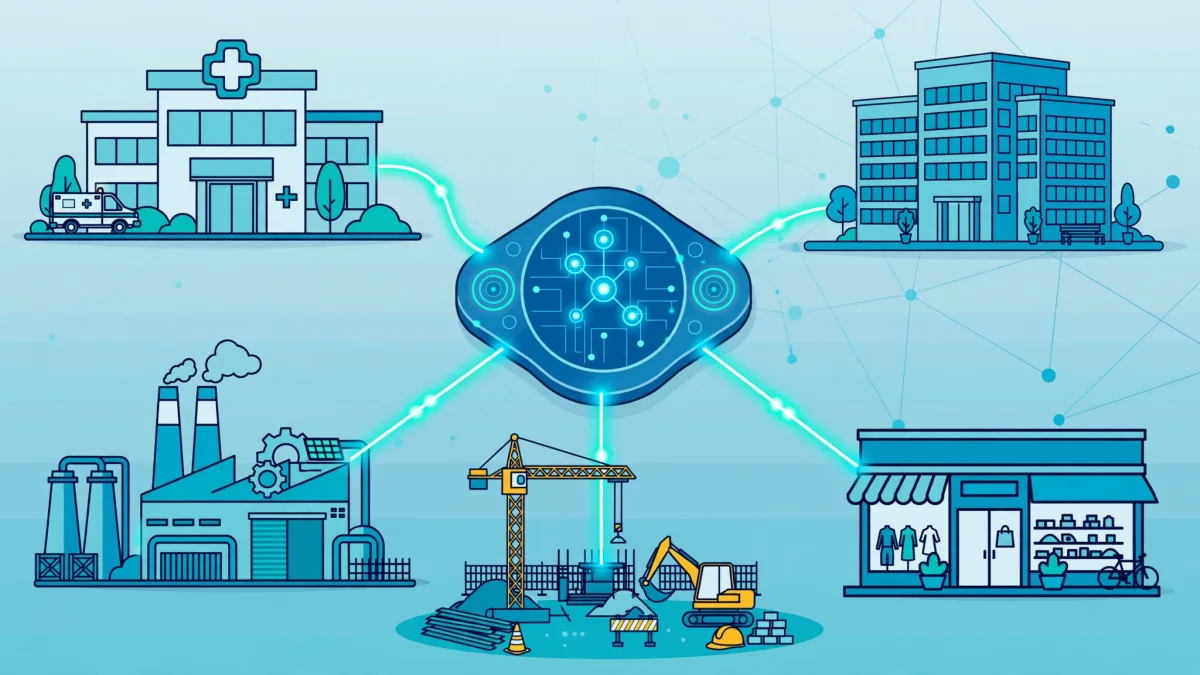
Every industry runs on its own language, its own rules, and its own daily rhythm. A hospital schedules patients, tracks treatments, and reports to regulators. A factory plans production runs, manages bills of materials, and monitors machine downtime. A hotel juggles room inventory, guest preferences, and seasonal pricing. Yet for years, businesses in all three…
Every industry runs on its own language, its own rules, and its own daily rhythm. A hospital schedules patients, tracks treatments, and reports to regulators. A factory plans production runs, manages bills of materials, and monitors machine downtime. A hotel juggles room inventory, guest preferences, and seasonal pricing. Yet for years, businesses in all three industries were offered the same generic software and told to make it fit. That mismatch is exactly why industry-specific software has become one of the fastest growing segments in business technology.
Industry-specific software is built around the workflows, terminology, compliance rules, and integrations of one particular sector. Instead of forcing your team to bend its processes around a generic tool, the tool arrives already shaped to how your industry actually works. Analysts estimate the vertical SaaS market at roughly 143 billion dollars in 2026, growing at about 16.3 percent per year through 2035, faster than the broader SaaS market. Buyers are tired of customizing generic platforms and are choosing systems that speak their industry's language from day one.
What Is Industry-Specific Software?
Industry-specific software, sometimes called vertical software, is designed for the needs of a single industry or niche. It includes the data fields, workflows, reports, and integrations that businesses in that sector use every day, built in rather than bolted on.
A generic CRM tracks contacts and deals. A CRM built for real estate tracks listings, viewings, commission splits, and buyer financing stages. A generic project tool tracks tasks and deadlines. A construction platform tracks RFIs, change orders, submittals, daily logs, and safety inspections.
Industry-specific systems typically share four traits:
- Built-in industry workflows: processes such as patient intake, production scheduling, or loan origination come preconfigured.
- Industry terminology: screens, fields, and reports use the words your team already uses, which shortens training time.
- Compliance support: rules such as HIPAA in healthcare or building codes in construction are reflected in the system.
- Ready integrations: connections to the equipment, marketplaces, payment systems, and registries your industry depends on.
These systems can be bought as off-the-shelf vertical products or developed as tailored solutions for one business. If you want to understand that distinction, our guide on custom versus off-the-shelf software walks through the decision in detail.
Why Industry-Specific Software Beats Generic Tools
Generic software promises flexibility. In practice, that flexibility often becomes a project of its own: months of configuration, third-party add-ons, and workarounds.
1. Faster implementation and faster value
Because industry workflows are preconfigured, deployment is usually measured in weeks rather than months. Industry cloud templates from major vendors pre-bundle regulatory workflows and can shorten deployment from months to weeks. Your team starts with a system that already looks familiar, so adoption happens faster and the return arrives sooner.
2. Less customization, lower long-term effort
Every customization you add to a generic platform becomes something you must maintain through every update. Industry-specific tools need fewer workarounds because the standard configuration already covers most of your processes.
3. Compliance built into daily work
In regulated industries, compliance is not a once-a-year audit. It is a daily reality. Industry-specific systems bake audit trails, access controls, retention rules, and reporting formats into everyday screens. A clinic does not have to remember to log consent correctly. The system prompts for it.
4. Reporting that answers industry questions
Generic dashboards show revenue and task counts. Industry dashboards show bed occupancy, machine utilization, table turnover, or loan pipeline aging. When reports match the metrics your leadership actually reviews, decisions get faster.
5. Higher adoption because the tool feels familiar
The best software is the software people actually use. When a system uses your team's vocabulary and mirrors its real process, resistance drops. Users do not need to learn a new way of working just to satisfy a tool.
Industry-Specific Software Examples by Sector
The value of vertical software becomes clearest when you look at real industries. Here is how tailored systems differ from generic ones across six major sectors.
Healthcare
Healthcare is the largest and fastest growing vertical for industry software. Hospitals, clinics, and life sciences companies use electronic health records, practice management systems, telehealth platforms, and clinical trial software. Industry analysts project healthcare business software to grow at roughly 12.6 percent per year, the fastest rate among major sectors. Healthcare AI adoption also climbed from 38 percent of organizations in 2024 to 67 percent in 2026, and regulators cleared 178 AI medical devices in 2025, up from 91 in 2024.
Manufacturing
Manufacturers need MRP (material requirements planning), production scheduling, quality control, shop-floor data collection, and maintenance management. A generic tool cannot plan a production run against a bill of materials, but manufacturing software does it natively. Eurostat data for 2025 shows 57.62 percent of manufacturing enterprises in the EU use ERP systems, one of the highest adoption rates of any sector.
Retail and eCommerce
Retailers live on inventory accuracy, omnichannel orders, promotions, and customer loyalty. Retail-specific platforms unify point of sale, online storefronts, warehouse stock, and returns in one view. When a customer buys online and returns in store, the system handles it as one transaction. In the EU, 53.77 percent of wholesale and retail businesses use ERP systems.
Construction
Construction runs on drawings, bids, change orders, subcontractor schedules, and site safety. Construction platforms such as Procore, which earned around 780 million dollars in revenue in 2024 serving only the construction industry, prove how much value a focused vertical product can create.
Hospitality
Hotels, restaurants, and travel businesses need property management, reservation engines, channel management, table booking, and guest experience tools. Hospitality software handles seasonal pricing, room inventory across booking channels, and guest history in ways a generic booking tool cannot.
Professional and financial services
Law firms need matter management, time tracking, and billing rules. Accountants need engagement tracking and tax workflows. Banks and insurers need KYC, claims, underwriting, and regulatory reporting. That is why industry-specific CRM and sales solutions for professional services differ so much from a generic contact manager.
Industry-Specific Software vs Generic Software vs Custom Software
| Factor | Generic software | Industry-specific software | Fully custom software |
|---|---|---|---|
| Fit to your workflows | Low, needs heavy configuration | High, workflows built in | Exact, built around you |
| Time to go live | Medium, configuration takes time | Fast, templates ready | Slowest, built from scratch |
| Compliance support | Generic controls only | Industry rules included | Designed to your exact needs |
| Flexibility | Broad but shallow | Deep in one industry | Unlimited |
| Best for | Simple, common processes | Most businesses in one industry | Unique or competitive processes |
For most businesses, industry-specific software is the sweet spot: it delivers most of the fit of a custom build at a fraction of the effort. When your processes are truly unique, or when a tailored system is itself your competitive advantage, a custom software development approach may be the better investment. Many companies combine the two, using a vertical product for standard operations and custom development for the workflows that set them apart.
How to Choose Industry-Specific Software
Choosing the right vertical system is a structured decision, not a demo contest. Follow these steps in order.
Step 1: Map your real workflows first
Before you look at any vendor, document the processes that run your business day to day: how an order flows from quote to delivery, how a patient moves from booking to follow-up, how a project moves from bid to handover.
Step 2: List your compliance and reporting obligations
Write down every regulation, audit, and report your industry requires. Then ask each vendor to show you, in the live product, how those obligations are handled.
Step 3: Check the integrations that matter
Your software must connect to the tools your industry runs on: lab systems, payment processors, booking channels, accounting platforms, equipment sensors, government portals. Ask for named integrations and reference customers using them, not vague promises of an API.
Step 4: Evaluate the vendor's industry depth
A true vertical vendor lives in your industry. Its team attends your trade events, its roadmap reflects your regulations, and its support staff understand your terminology.
Step 5: Run a pilot with real data
Never buy on a polished demo alone. Run a pilot with your own data and your own team for two to four weeks. Measure whether the workflows feel natural and whether users adopt the system without constant prompting.
Step 6: Plan for growth and exit
Ask how the system scales as you add locations, users, or product lines. Ask how you export your data if you ever leave.
Industry-Specific Software Selection Checklist
Use this checklist when comparing vendors.
- Industry workflows are preconfigured, not promised as future customizations.
- Compliance rules for your sector are built into the product.
- Terminology matches what your team already uses.
- Key integrations are live, documented, and used by other customers.
- Reporting covers the KPIs your leadership reviews.
- The vendor has proven customers in your exact industry.
- Data migration from your current system is included and tested.
- Data export is straightforward, with no lock-in penalties.
- The product roadmap shows continued investment in your industry.
Common Mistakes to Avoid With Industry-Specific Software
Mistake 1: Choosing on features instead of fit
A long feature list means little if the core workflow is awkward. Judge software by how your team performs its five most common tasks in it, not by how many boxes it ticks in a comparison sheet.
Mistake 2: Skipping the pilot
Demos are choreographed. Pilots are honest. A vendor that resists a pilot with real data is telling you something important.
Mistake 3: Underestimating data migration
Moving years of records from spreadsheets or a legacy system into a new platform is often the hardest part of the project. Budget time for cleaning, mapping, and validating data before go-live.
Mistake 4: Ignoring the vendor's future
Vertical vendors can be acquired, pivot, or stall. Check the vendor's financial health, release cadence, and customer retention before committing your operations to its platform.
The Future of Industry-Specific Software
Vertical software is getting smarter, not just narrower. AI is being embedded directly into industry workflows: clinical documentation assistance in healthcare, predictive maintenance in manufacturing, demand forecasting in retail, and automated compliance checks in financial services. Vertical products increasingly embed payments and other financial services directly into industry workflows, turning software into the operating layer of the whole business.
The line between vertical products and custom development is also blurring. Low-code tools and industry templates now let businesses start from a vertical foundation and tailor the last mile themselves. If your business needs that kind of tailored foundation, explore our industry-specific software development services. As ERP and CRM systems help businesses scale, the platforms that grow with your company win.
Frequently Asked Questions
What is industry-specific software?
Industry-specific software is software designed for the workflows, terminology, compliance rules, and integrations of one particular industry, such as healthcare, manufacturing, retail, construction, or hospitality. Unlike generic tools, it arrives preconfigured for how that industry actually works.
Is industry-specific software better than generic software?
For most businesses, yes, when industry workflows matter to daily operations. Industry-specific software usually means faster implementation, less customization, built-in compliance, and reports that match the metrics your industry uses. Generic software makes sense mainly for simple, universal tasks such as email or file storage.
Can small businesses use industry-specific software?
Yes. Cloud delivery has made vertical software accessible to small and mid-sized businesses, many of which adopt it as their first real business system. Small firms often benefit the most because they lack the IT resources to customize a generic platform themselves.
How long does it take to implement industry-specific software?
Timelines vary by industry and scope, but vertical systems typically go live faster than generic platforms because workflows, templates, and compliance rules are preconfigured.
What if no industry-specific product fits our needs?
If your processes are genuinely unique, or if existing vertical products leave critical gaps, a custom-built solution may be the right answer.
How do I avoid vendor lock-in with industry-specific software?
Before signing, confirm that you can export all your data in standard formats, understand the contract terms, and check that key integrations are not exclusive to one vendor.
Final Thoughts
Generic tools ask your business to adapt to the software. Industry-specific software adapts to your business. For most companies in healthcare, manufacturing, retail, construction, hospitality, and professional services, that difference shows up as faster go-live, higher adoption, cleaner compliance, and reports that actually guide decisions.
The key is to choose on fit, not on feature lists. Map your workflows, list your compliance obligations, verify integrations, run a real pilot, and check the vendor's depth in your industry.
Ready to build or choose a system shaped around your industry? Contact Skills Technology Solutions and tell us about your sector, your workflows, and your goals. We will help you find or build the right industry-specific solution for your business.
Related Articles
Keep reading — more guides you may find useful.
Related Services
Services connected to this guide.