
Block Dessa AI Voice Model: A Buyer Guide for Businesses
Block Dessa is a speech-only AI voice model trained on human conversation alone. This buyer guide explains where a human-sounding voice helps, where it creates risk, and what to demand before using one.
The Short Answer
The Block Dessa AI voice model is a new kind of voice technology that, according to its maker, learns to speak the way people learn to speak: by listening to human conversation. Jack Dorsey's company Block unveiled Dessa in October 2026, and the announcement has drawn attention for a simple reason. Most voice assistants today…
The Block Dessa AI voice model is a new kind of voice technology that, according to its maker, learns to speak the way people learn to speak: by listening to human conversation. Jack Dorsey's company Block unveiled Dessa in October 2026, and the announcement has drawn attention for a simple reason. Most voice assistants today are built from text first and speech second. Dessa, Block says, was trained from scratch on human conversation only, with no text and no pretrained models. That design choice changes how the model sounds, and it changes the questions buyers should ask before putting a voice like this in front of customers.
This guide is not a news repeat. It is a buyer guide for business owners, marketers, support leaders and video teams who are wondering whether a human sounding voice is worth using, where it genuinely helps, where it creates risk, and what to demand from any provider before a synthetic voice speaks on behalf of your brand. The central point is one every buyer should carry into every demo: naturalness is not trustworthiness. A voice that pauses and laughs like a person needs disclosure rules precisely because it sounds human.
What Is the Block Dessa AI voice model?
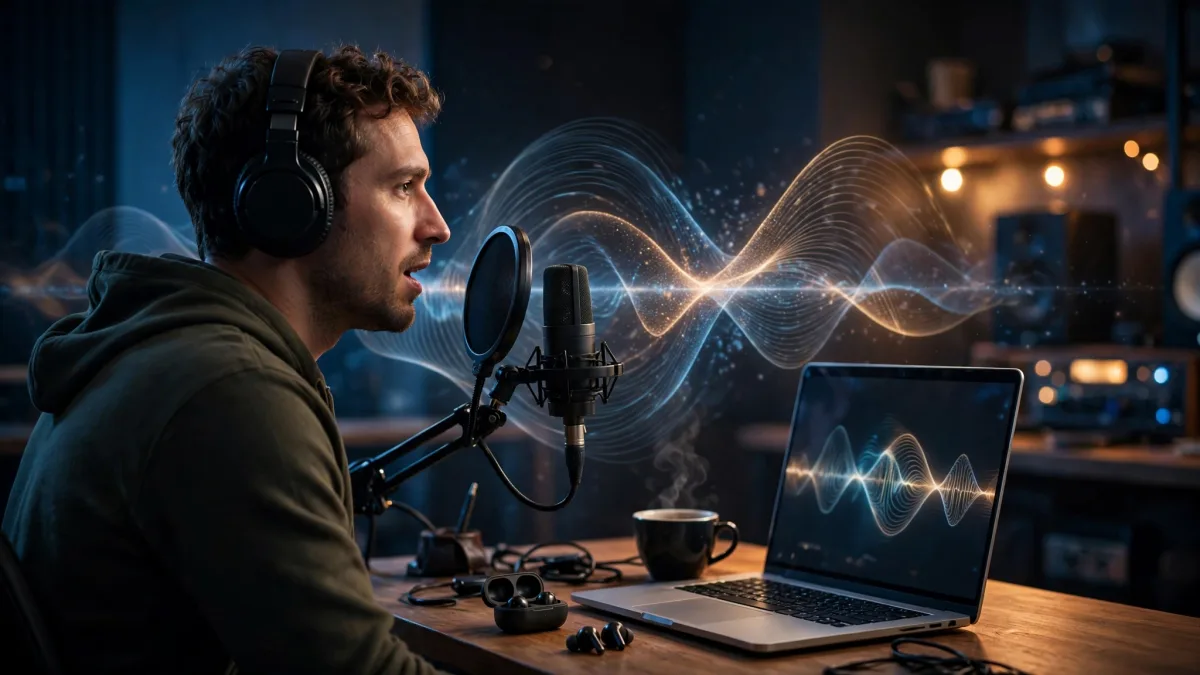
Block describes Dessa as a full duplex speech to speech model. In plain terms, that means it listens and speaks at the same time, much like a person in a live conversation, rather than waiting for a finished sentence, converting it to text, thinking in text, and then reading an answer aloud. Block says Dessa decides what to say, when to respond and how to express itself, including its voice and conversational style.
The training method is what makes Dessa unusual. Block reports that the model was trained only on human speech, with no text data and no pretrained models borrowed from other systems. The result, Block says, is a voice that reacts naturally to humour, adjusts its volume when asked, and responds spontaneously rather than sounding like a script being read aloud. Talking with it, Block says, feels like talking with a person, full of emotion, nuance and pauses.
There are important limits to keep in mind. Block has not published a research paper, released model weights, opened a public API, shared benchmark results or announced pricing for Dessa. As of the announcement, Dessa is available only as a research preview on a waitlist, with early access for a small group of AI safety researchers who are being asked to find risks. That means businesses cannot buy it, test it in production or measure it against other voice tools today. Everything about its capability in this article is therefore presented as Block reported, not as independently verified performance.
Why a Speech Only Voice Sounds Different
To understand why Dessa sounds different, it helps to understand how most voice systems work today. A typical voice assistant follows a chain: speech recognition turns your words into text, a language model plans a reply in text, and a speech synthesiser reads that reply aloud. Each step is good at its own job, but the joins between them can flatten a conversation. Pauses become uniform. Laughter becomes an afterthought. Interruptions feel clumsy because the system was never really listening while it spoke.
A speech only approach tries to remove those joins. Because Dessa was trained on conversation itself rather than on text about conversation, Block says it learns the messy parts of talking: when to jump in, when to hold back, how a joke lands, and how emphasis changes meaning. For listeners, the difference is not just clarity. It is timing, rhythm and tone, the signals humans use to judge whether someone is really paying attention.
Where the Block Dessa AI voice model Could Help Businesses
Even though Dessa itself is not available to buy, the kind of voice it represents has clear uses. Businesses should think about these use cases now, so that when tools like this do reach the market, they adopt them for the right jobs rather than the flashiest ones.
Customer Support That Feels Less Robotic
Support calls fail most often on tone, not on facts. A voice that can pause, soften its volume when asked and respond to humour could make routine calls feel less like arguing with a menu. The best use is handling simple, high volume enquiries, such as order updates and appointment changes, while human agents handle complex and emotional cases.
Narration and Video Voiceovers
Video is where a natural voice pays off most visibly. Product explainers, training videos and brand stories all depend on narration that holds attention, and a voice with natural pacing can carry a viewer through a longer video. A speech first voice tool could speed up production and allow quick re-records when a script changes. A professional video production service can help you judge where a synthetic voice helps a video and where a human voice still carries the story better.
Readers who want a broader view of this shift can also explore how AI video production is changing business video in 2026, from scripting and editing to the voice layer that sits on top of the visuals. The lesson of that guide applies here too: the tool is only as good as the story it tells.
Accessibility and Everyday Convenience
Accessible voice interfaces help people who cannot easily read a screen or type, from hands free control while driving to spoken summaries for low vision users. A voice that handles interruptions and backchannel cues naturally makes these interactions less frustrating and more reliable.
Language Practice and Training
Training is another strong fit. A voice that responds spontaneously could play a customer in a practice scenario or a colleague in a difficult conversation drill, giving trainees a more realistic rehearsal than a fixed script can offer.
Where a Human Sounding Voice Creates Risk
The risks of a voice like Dessa are not hypothetical. They follow directly from its strength. If a voice can pass as human, it can be misused in ways a robotic voice cannot, and businesses that adopt such tools without safeguards may inherit those risks.
Impersonation
The most serious risk is impersonation. A voice that captures emotion, nuance and pauses could be used to imitate a real person, a company executive or a support agent, and persuade listeners to share information or follow instructions they would otherwise question. Businesses should assume any voice technology they adopt will be judged by how hard it is to misuse, not just by how good it sounds.
Undisclosed Synthetic Calls
A second risk is the undisclosed synthetic call. If a customer believes they are talking to a human employee and later discovers they were talking to a machine, it damages trust in every future call from that business. People accept talking to machines when they know they are doing so. Disclosure is therefore not a courtesy. It is a core part of the product.
False Confidence and Errors
A natural voice can also create false confidence. Listeners tend to trust information more when it is delivered smoothly, so a warm voice can make an incorrect answer sound authoritative. Businesses must separate two questions: does this voice sound good, and is what it says correct?
Consent and Voice Ownership
Finally, there is the question of whose voice a model learned from. Businesses adopting any speech model should ask where the training voices came from and whether the people behind those voices consented to that use. A voice is personal in a way text is not, and using one modelled on real people without clear consent is a reputational and legal risk.
What to Demand Before You Use a Synthetic Voice
Dessa is not yet a product you can buy, which makes this the right moment to set your standards. When voice tools like this do reach the market, use the following checklist before any synthetic voice speaks to your customers.
- Consent for training voices. Ask the provider to explain, in writing, where the training voices came from and what consent was obtained. If the provider cannot answer clearly, do not proceed.
- Misuse controls. Ask what stops someone from using the tool to impersonate a real person. Look for identity verification, usage monitoring, watermarking or other technical controls, and ask how they are enforced rather than merely promised.
- Clear disclosure. Require that every synthetic interaction identifies itself as synthetic at the start, not buried in terms and conditions. A short, honest introduction protects your customers and your brand.
- Accuracy checks. Test the voice on your own content, with your own fact checking, before it goes live. A beautiful voice reading wrong information is worse than a plain voice reading correct information.
- Human escalation. Make sure a caller can reach a human quickly, at any point, without fighting the system. The best voice tools know when to hand over.
- Data handling. Ask where conversations are stored, for how long, and who can access them. Voice recordings are sensitive personal data, and your customers will expect you to treat them that way.
- Local or cloud control. Understand whether the voice runs on your own machines or on a provider's servers, since that choice affects privacy, reliability and cost of operation over time.
How Dessa Compares to Other Voice Tools Businesses Are Watching
Dessa is not arriving into an empty market. Businesses are already evaluating real time voice agents and avatar based video tools, and Dessa should be judged against what those tools actually do today.
For example, Mistral's Voxtral 3 voice agent stack shows how a real time voice system can be assembled for business use. Similarly, Gupshup's avatar agent pairs a voice with a visible avatar for video based interaction. Dessa adds voice naturalness to that picture, but a business still needs the full system around the voice, including the knowledge base, escalation path and compliance controls, before it has a product customers can trust.
What Businesses Should Do Now
Since Dessa is only on a waitlist for a research preview, the smart move is preparation rather than purchase. Identify the one or two voice use cases where naturalness would genuinely change outcomes, such as support calls or training videos, and write your disclosure policy before you need it: customers must always know when they are talking to a machine.
Next, review your existing video and support workflows. A training video with a natural voiceover may be worth the investment, while a sensitive complaint or refund conversation may still belong to a human, no matter how good the synthetic voice becomes.
Finally, keep watching the safety work. Block's decision to give early access to safety researchers before a wider release is a positive signal, and those findings will shape what responsible deployment looks like.
Frequently Asked Questions
What is the Block Dessa AI voice model?
Block describes Dessa as a full duplex speech to speech model trained from scratch on human conversation only, with no text and no pretrained models. Block says it decides what to say, when to respond and how to express itself, including voice and conversational style.
Can businesses buy or use Dessa today?
No. As of the announcement, Dessa is available only as a research preview on a waitlist, with early access for a small group of AI safety researchers. Block has not published an API, pricing or a public release date.
Why does training only on speech matter?
Block says training only on human conversation, rather than on text, helps Dessa learn the natural parts of talking, such as timing, pauses, humour and emphasis. That is why Block claims conversations with Dessa feel like talking with a person.
Is a more natural voice always better for business?
No. Naturalness improves support calls, narration and accessibility, but it also increases the risk of impersonation and undisclosed synthetic calls. Naturalness is not trustworthiness, so a natural voice needs stronger disclosure and misuse controls, not weaker ones.
What should a business demand before using a synthetic voice?
Demand clear consent for training voices, misuse controls against impersonation, upfront disclosure that the caller is speaking to a machine, accuracy testing on your own content, easy human escalation, and clear rules on how voice recordings are stored and accessed.
Will Dessa replace human support agents and voice actors?
Nothing in Block's announcement supports that conclusion. The strongest use cases are routine, high volume conversations and repeatable narration, while complex, emotional and sensitive conversations still need human judgement. Treat synthetic voices as a complement to human teams, not a replacement for them.
Block's Dessa is a signpost, not yet a product. It points toward a future where synthetic voices sound genuinely human, and it asks businesses a question to answer before that future arrives: if your customers cannot tell a machine from a person, what rules will make sure they never have to guess? Answer that well, and a human sounding voice becomes a real asset. If you want help planning video and voiceovers around that standard, talk to our team and we will help you build a voice strategy your customers can trust.
Related Articles
Keep reading — more guides you may find useful.

Related Services
Services connected to this guide.